martes, 28 de septiembre de 2010

chemical changes

Phisical change: a change in size , shape , or state , without forming a new substance.


2. Chemical change: a change in matter that produces a new substance with different properties from the original.


3.Chemical reaction: a chemical change of original substances into one or more new substances.


4.Reactant: one of the original substances before a chemical reaction takes place.


5. Product: one of the new substances produced when a chemical reaction takes place.


vocabulary mixture and solucion

Mixture: two or more parts blended together yet keeping their own properties and not turning into a new substance.

2.Solution: a mixture in which substances are completely blended so that the properties are the same throughout and the substances stay blended.


3.Suspension: a mixture of substances that separate upon standing.


4.Colloid: particles ( or droplets ) large enough to block out light spread throughout another substance.


5.Emulsion: a liquid spread through another liquid.


6.Aerosol: liquid dropsor solid particles spread through a gas.


7.Gel: a solid spread through a liquid.


8.Foam: a gas spread through a liquid or solid.


voabulary solids liquids and gases

1.State of matter: any of the forms matter can exist in.

melting point: the temperature at which a solid changes state into a liquid.


3.Boilling point: the temperature at which a liquid changes state into a gas.


4.Freezing point: the temperature at which a liquid changes state into a solid.


vocabulary 6

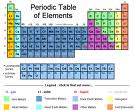
Element: a basic building block of matter; a pure substance that cannot be broken down into anything simpler.


2.Compound: a chemical combination of two or more elements into a single substance.


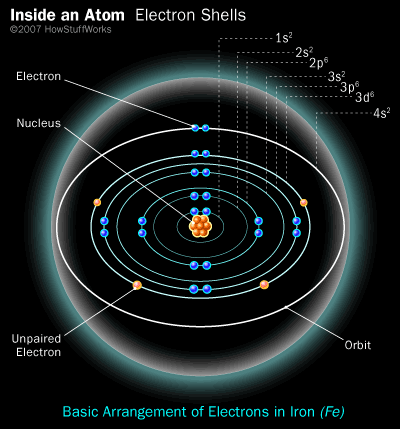
3.Atom: the smallest unit of an element that still has the properties of the element.


4.Proton: a particle with a positive charge in the nucleus of an atom.


5.Neutron: an uncharged particle in the nucleus of an atom.


6.Electron: a particle with a negative charge moving around the nucleus of an atom.


7. Nucleus: the dense center part of an atom.


8. Molecule: a group of more than one atom joined together that acts like a single particle.


vocabulary 5

mass:the amount of matter in an object.


volume:the amount of space an objects takes up.

weight:a measure of the force of gravity betwwen Earth and  an object. 


density:a measure of how tighly packed matter is ;the amount of mass contained in a given volume.

bouyancy:the upward push on an object by the liquid the object is placed in.


conduct: allow heat or electricity to flow through readily.
insulate:not allow heat or electricity to flow through readily


martes, 21 de septiembre de 2010

science project " earth polucion"


ACADEMIA INTERAMERICANA DE PANAMA
SEDE CERRO VIENTO

SCIENCE PROJECT


TEACHER:RAMON GUERRA


STUDENT: GABRIELA BONILLA


DATE 22 OF SEPTEMBER 2010


INTRODUCTION


They are many types of polucion like:water,land, air polucion and many others.
Near my house are land polucion .The people trow trash in the street and in the houses.


POLUCION

Polucion is the subtance or forms of energy that cause biologic effect in the ecosystem and in the living things.


LAND POLUCION

Land polucion is when the person trow different trash,waste or substances that damage the Earth ecosystem.


CONCLUSION

In my conclusion I learned that we can not trow the trash in the land because Earth can be sick and also we can be sick abaut the trash and we can die.


SOLUTION TO THE PROBLEM.

In my solution we can organize cleanup days and reduce and recicle the waste and talk to the person abaut that.
 
 
thanks! ...=) by :Gabriela Bonilla.


martes, 7 de septiembre de 2010

album2(solar system)

In the solar system are 8 planets.  Pluto is no a planet.


Sun:the sun is a very big star and a examlpe of natural light.


Mercury:Mercury is the innermost and smallest planet in the solar system.


Venus:Venus is the second planet from the Sun, orbiting it every 224.7 Earth days. The planet is named after Venus, the Roman goddess of love and beauty.


Earth:Earth is the third planet from the Sun, and the densest and fifth-largest of the eight planets in the Solar System. It is also the largest of the Solar System fourte rrestrial planets.


Mars:Mars is the fourth planet from the Sun in the Solar System. The planet is named after theRoman god of war, Mars. It is often described as the Red Planet.


Jupiter:Jupiter is the fifth planet from the Sun and the largest planet within the Solar System.


Saturn:Saturn is the sixth planet from the Sun and the second largest planet in the Solar System, after Jupiter.


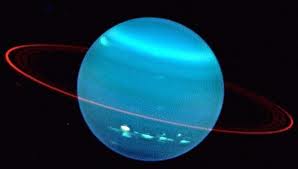
Uranus: Uranus is the seventh planet from the Sun, and the third-largest and fourth most massive planet in the Solar System. It is named after the ancient Greek deity of the sky Uranus.


Neptune:Neptune is the eighth and farthest planet from the Sun in our Solar System. Neptune is 17 times the mass of Earth and is slightly more massive than its near-twin Uranus, which is 15 Earth masses and not as dense.


I learnd that the solar system have 8 planet and that pluto is no a planet and that our galaxi is the Milky Way.